
Sewer Camera Price & Comparison Guide
Locater Guys carries a selection of push-rod cameras and mainline crawlers from brands like RIDGID, Hathorn (Minicam), Electric Eel, Insight Vision, Wöhler, Milwaukee (M18), and Aries Industries. Each brand targets different needs: for example, RIDGID and Hathorn offer versatile push-reel systems for plumbers and contractors, while Aries provides high-end crawler trucks for municipal pipelines. In this guide, we detail key models, specs, and typical user applications. Technical specs (camera head diameter, cable length, resolution, lighting, transmitter, IP rating, battery), price range, and pros/cons are provided. A comparison table and a recommendation matrix help match cameras to use cases. All information is drawn from Locator Guys’ product pages and manufacturer sources.
Sewer Camera Price Ranges
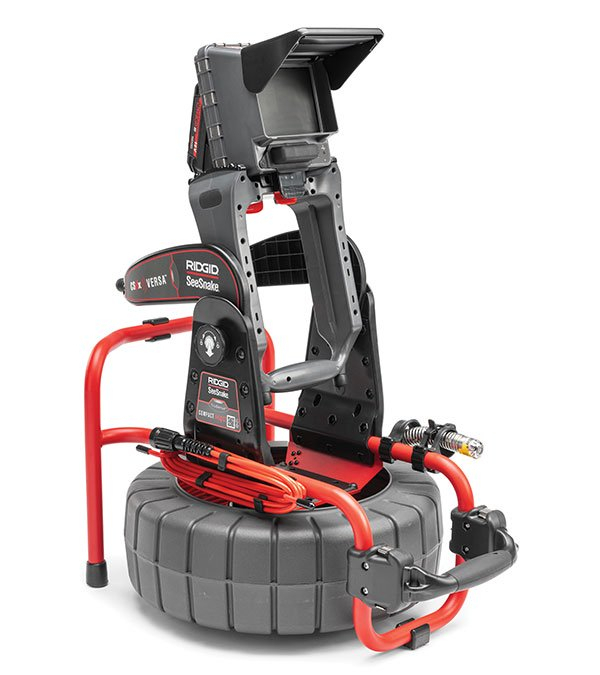
Entry-level push cameras start at a few thousand dollars for basic 100′ systems. For example, small hand-carried reels with 100–200′ cables (e.g., RIDGID Compact or Mini) often cost in the $4K–$7K range. Mid-tier systems (200–300′ cables, rugged steel frames) typically run $8K–$12K. High-end push cameras with bright HD cameras, pan/tilt heads, and long cables (300′+) can exceed $15K. For instance, the Hathorn H7 200′ system lists around $8,650, and the Wöhler VIS 700 HD push-cam is about $10,394.
At the top end, vehicle-mounted mainline crawler systems cost far more. A full Aries Voyager or Pathfinder sewer truck (with 6″+ HD crawler, 1200′ cable, winches, and controller) can easily exceed $100K. These are generally custom-configured and aren’t priced online; consult Locator Guys for quotes. Smaller mainline crawlers (Aries Pathfinder tractors) also cost tens of thousands. Financing or leasing may be available for high-end systems.
Brand Overviews & Key Models
The following brand summaries highlight each manufacturer’s core strengths, target users, and technical positioning in the market. While many systems may appear similar on paper, differences in durability, imaging quality, cable design, and ecosystem compatibility can significantly impact long-term value. Reviewing each brand’s approach will help you determine which platform best aligns with your inspection volume, pipe sizes, and budget.
Hathorn (Minicam)
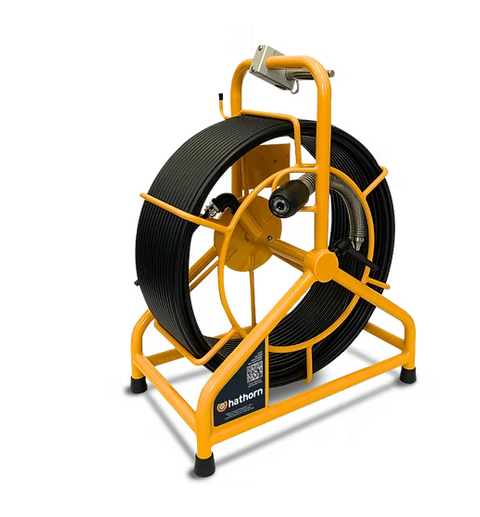
USA-made push-reel cameras, noted for durability. Models include the Hathorn H2, H7, and H12+. These use lightweight steel frames and bright LEDs. For example, the H7 system has a 7″ LCD, 200′ of ½″ cable, and interchangeable self-leveling heads (1.00″, 1.23″, 1.43″ or 1.68″ diameter). The standard head (1.43″) works in 3″–10″ pipes. The H2 is a basic 200′/200 head system (LCD, no Wi-Fi) around $4K. The H12+ uses a 12″ sunlight-readable display and supports up to 600′ of cable (battery-powered by Milwaukee 18V, ~5–6 hr runtime, IP65-rated cover).
Use cases: Compact enough for plumbers, strong enough for contractors. Good all-rounders for 3″–12″ lines. Pros: Very rugged construction, bright LEDs, lifetime warranty. Cons: Video is standard-definition (LCD up to 1024×768), heavy reels (~40–50 lb), no built-in wireless streaming (Wi-Fi module optional).
RIDGID (SeeSnake)
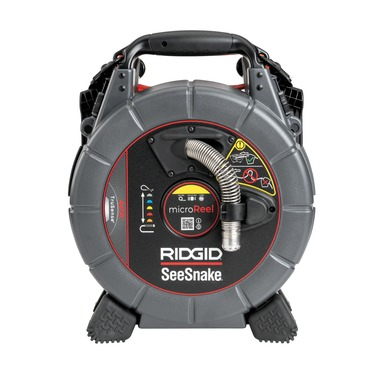
Leading trenchless brand. RIDGID’s push cameras come in sizes from mini to 325′ reels. Key lines: the SeeSnake Mini Pro (25 mm HD head, 200′ cable), Standard (34 mm, 200–325′), and small 100′ models (Compact2/M40). All use high-intensity LEDs and stainless heads and have integrated 512 Hz sonde locators. The Mini Pro has a 25 mm self-leveling digital head, 200′ mid-flex cable, 640×480 video, and 512 Hz transmitter. The microDRAIN APX (shown below) is for tiny lines: 22 mm camera, 65′ high-flex cable, navigating 1¼″–3″ lines. RIDGID’s monitors (CS6x/CS12x) add Wi-Fi and HD touchscreens.
Use cases: Broadly for plumbing and small to mid-size mains (2″–12″). Contractors prize the modular system (mix-and-match reels/monitors). Pros: Wide model range (including compact/portable models), TruSense features (HDR imaging, TiltSense) for advanced diagnostics, lifetime cable/head warranty. Cons: Standard resolution only (640×480), cable/heads are delicate, electronics add weight.
Electric Eel (EELvision)
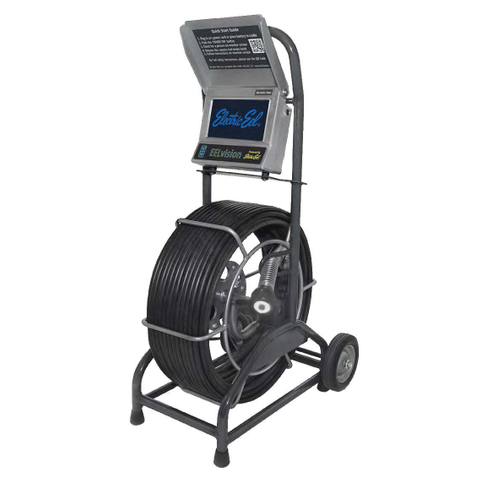
Heavy-duty push cameras for tough jobs. Locator Guys carries the EELvision ELITE and simpler VIEW models. The ELITE (featured model) includes a 1.3″ self-leveling color camera (for 3″–10″ pipes), a large 7″ daylight-readable monitor, and 200′ of ½″ premium pushrod. It records to USB with one-touch operation. A built-in 512 Hz transmitter runs continuously, and the rod reels on wheeled metal frames with foot brake. Dual power option: accept 110 V or any 18 V cordless battery. Price is about $7,650 for the ELITE.
Use cases: Best when durability is needed (municipal or heavy construction). The steel frame and big wheels make field use easy. Pros: Extremely rugged build, bright LEDs, integrated recording and locating, huge monitor. Cons: Very heavy (~70–80 lb) and bulky, only VGA video, limited to 200′ length, no built-in Wi-Fi.
Milwaukee Tools (M18 Pipeline)
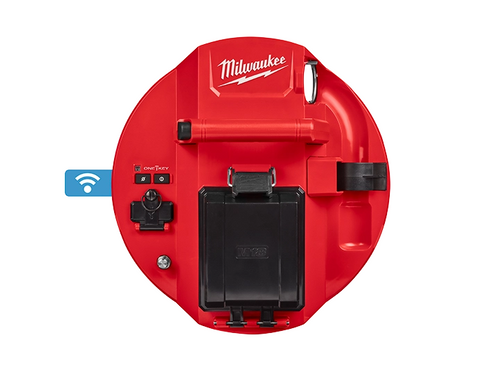
Battery-powered modular crawlers and reels. Milwaukee’s M18 Mainline System uses cordless power (M18 batteries) for portability. Models include: 200′ Mid-Stiff Reel (25 mm self-leveling HD camera, 1080p, 4× digital zoom), 325′ Stiff Reel (34 mm 1080p, 4× zoom), and a 120′ compact reel (25 mm HD, backpackable). All reels plug into the M18 500 GB Control Hub (tool-only, ~500 GB DVR, integrated push-cable locator, ONE-KEY tracking). A wireless 8″ touch monitor streams video via the hub. There’s also an M12 locator for the 512 Hz sondes.
Use cases: Drain maintenance contractors needing cordless freedom. These systems inspect ~2″–10″ lines with true 1080p video (unlike most pushcams). Pros: High-res imaging, quick-swappable batteries, rugged digital controls (zoom, Wi-Fi, reporting). Cons: Very expensive (control hub ~$3K, each reel ~$10K+), heavy reels (though wheeled), needs multiple batteries.
Insight Vision
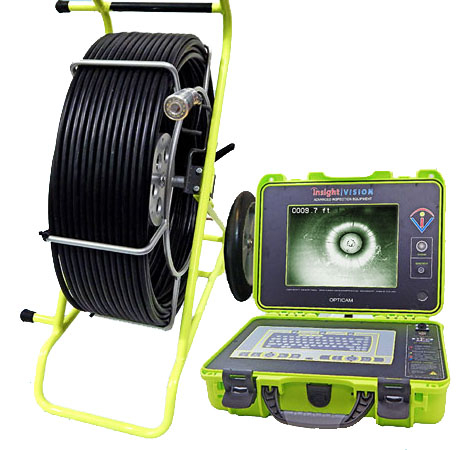
Manufacturer of the Opticam push-camera system. Opticam features a 1.3″ color camera on 200–400′ cable. It emphasizes connectivity: a 10.4″ tablet monitor streams live video via Wi-Fi (to iOS/Android) and has one-touch USB recording. It includes a full QWERTY keypad and built-in 512 Hz sonde. The system stores video and captures text/voice notes on-screen. Resolution is 640×480. Battery life is about 6 hrs (with optional external pack).
Use cases: Plumbers or small contractors wanting a low-cost solution with smartphone/tablet integration. Pros: Low entry price (~$5–6K), long cable options, wireless streaming to devices. Cons: Low resolution, consumer-grade reliability, no ruggedized monitor (relies on tablet), fewer accessory options.
Aries Industries
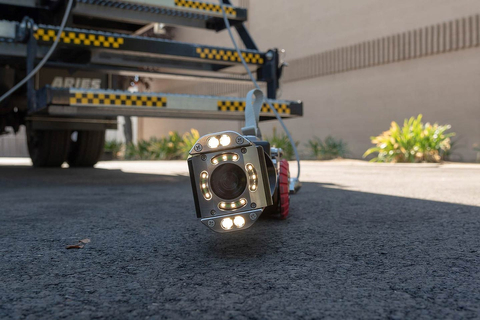
Maker of mainline sewer crawlers and vans. Sold systems include the Pathfinder series (self-propelled crawlers for 6″–48″ pipes) and Voyager HD (truck-mounted 1200′ reel + transporter). These are professional rigs with 1080p pan/tilt cameras, dual monitors/joysticks, and data modules. For example, the Voyager HD truck includes a 6-wheel transporter, pan/tilt HD cam, and 1200′ Kevlar cable. Prices are typically $50K+ for crawlers and $100K+ for full vans.
Use cases: Municipal/public works or large contractors inspecting large-diameter mains (6″ and up) with pipeline condition-reporting. Pros: Ultra-long reach (hundreds of feet of cable), HD/PTZ imaging, heavy-duty design (IP68 electronics), PACP-compliant reporting. Cons: Extremely expensive and heavy; requires a service vehicle and trained operators; unnecessary for small lines.
Model Comparison Table
The table below provides a side-by-side technical comparison of leading sewer camera systems, including head diameter, cable length, video resolution, locating capability, IP protection, power source, and typical MSRP. Focus on the specifications that directly impact your work, pipe diameter range, inspection distance, image clarity, and portability. Use this comparison to quickly narrow your options before reviewing full model details or requesting a quote from Locator Guys.
| Brand | Model | Head Ø | Cable Length | Video Res | LEDs | Locating | Ruggedness (IP) | Power | Price (MSRP) |
|---|---|---|---|---|---|---|---|---|---|
| Hathorn | H7 Complete (200′ reel) | 1.23″–1.68″ SL | 200′ | 1024×768 LCD | 4–6 cool-white LEDs | 512 Hz sonde | IP65-rated (control) | 18V battery (~5 h) | ~$8,650 |
| Hathorn | H12+ Control Module | – | – | 1024×768 (12″) | – | – | IP65 | 18V battery (~4 h) | $4,850 (module) |
| RIDGID | SeeSnake Mini Pro (CS6x) | 25 mm | 200′ | 640×480 | LEDs | 512 Hz sonde | IP-rated equipment | Battery (~6 h) | ~$7,000+ |
| RIDGID | microDRAIN APX | 22 mm | 65′ | 640×480 | 12 LEDs | 512 Hz sonde | Stainless frame | Corded AC (9 VAC) | ~$7,600 |
| RIDGID | Compact2 (100′) | 16 mm (0.63″) | 100′ | 640×480 | 6 LEDs | 512 Hz sonde | Case (IPX?) | Internal Li-ion | ~$4,500 |
| Electric Eel | EELvision ELITE | 1.3″ | 200′ | ~640×480 | 12 LEDs | 512 Hz sonde | Heavy metal frame | 18V batteries or AC | ~$7,650 |
| Milwaukee | M18 200′ (mid-stiff reel) | 25 mm | 200′ | 1080p (HD) | Bright LEDs | Built-in TX (via hub) | Weather-resistant | M18 batteries | ~$10,000+ |
| Milwaukee | M18 325′ (stiff reel) | 34 mm | 325′ | 1080p (HD) | LEDs | Built-in TX | Weather-resistant | M18 batteries | ~$12,000+ |
| Milwaukee | M18 500GB Control Hub | – | – | Video storage | – | 512 Hz transmitter | IP67 | M18 batteries | $3,000+ (est.) |
| Wöhler | VIS 700 HD | 1.5″ PTZ | 100′ | 1080p (HD) | 12 dimmable LEDs | 512 Hz TX (head) | IP68 (head) | Li-ion rechargeable | $10,394 |
| Wöhler | VIS 250 (Compact) | 1.0″ | 100′ | 640×480 | 8 LEDs | 512 Hz TX | Durable case | Li-ion rechargeable | ~$4,500 (est.) |
| Insight Vision | Opticam (Entry Push Camera) | 1.3″ | 200–400′ | 640×480 | 12 LEDs | 512 Hz sonde | Rugged case | Internal battery (~6 h) | ~$5,000–$6,000 |
| Aries Industries | Voyager HD Mainline | 1080p PTZ | 1200′ | 1080p (HD) | 4 LEDs + wipers | 512 Hz TX | IP68 Electronics | Truck power | $100K+ (system) |
| Aries Industries | Pathfinder Crawler | 1080p Pan/Tilt | 100–600′† | 1080p | 4 LEDs | 512 Hz TX | IP68 / sealed | Tractor battery | $50K+† |
Best Sewer Camera by Use Case
Different users have different needs. The table below recommends camera types for typical categories, based on pipe size and budget:
| Use Case | Recommended Model(s) | Notes |
|---|---|---|
| Municipal / Utility | Aries Pathfinder / Voyager Crawlers | Designed for long runs and large sewer mains (6″+). High durability systems with PACP reporting capabilities. |
| Contractors | RIDGID Standard / Mini Pro, Hathorn H7 | Flexible mid-range reel systems (2″–10″). Proven ruggedness for daily field use. |
| Plumbers / DIY | RIDGID Mini / Compact, Insight Opticam | Portable, easy-entry models for 1″–4″ lines. Lower price point and simple operation. |
| Budget-Conscious | Insight Opticam, RIDGID Compact2 | Entry-level systems (~$5K range) with basic inspection features and streaming capability. |
| High-End | Wöhler VIS 700, Aries Voyager HD | Premium image quality and advanced features. Ideal for detailed inspections and professional reporting. |

Financing & Support Considerations
C&S Solutions (Locator Guys) emphasizes customer support. We offer free lifetime training, 24/7 technical support, and loaner equipment during service. All cameras come with manufacturer warranties (some with lifetime head/cable coverage). Financing and rental options are often available for larger purchases (contact Locator Guys for terms). The company “services what we sell”, ensuring maintenance and parts (even for older cameras) are readily available. This ongoing support helps protect your investment over the equipment’s lifetime.