
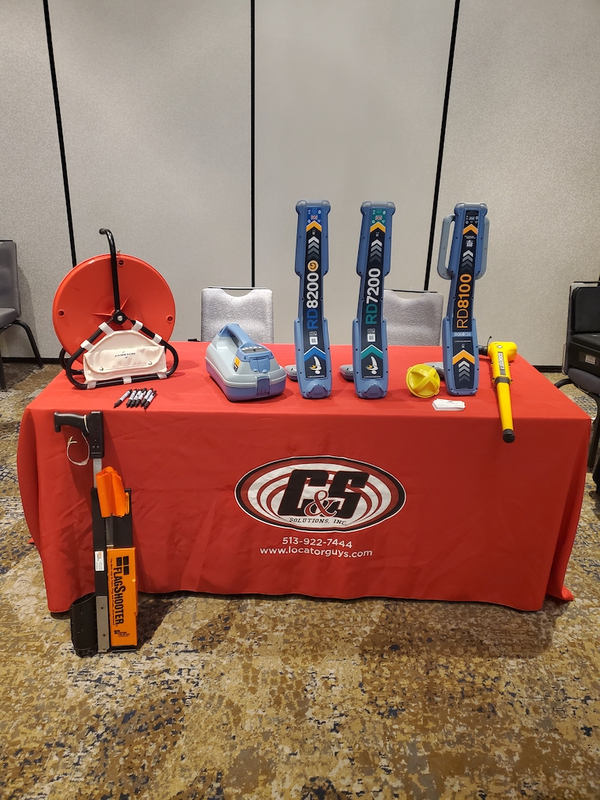
Best Utility Locating Equipment for Contractors (Buyer's Guide)
Choosing the best utility locating equipment isn't about finding a single "top" locator — it's about selecting the right technology for the type of utilities you're locating, the environments you work in, and the level of accuracy your projects demand.
We see contractors, municipalities, and private utility locators make costly purchasing mistakes every day by focusing on brand names, advertised depth ratings, or price alone. In reality, utility locating performance depends on multiple variables, including utility material, signal frequency, soil conditions, site congestion, and operator experience. Equipment that performs well in one application may be inefficient — or unreliable — in another.
This buyer's guide is designed for professionals who are actively evaluating utility locators for contractor work, municipal operations, and private utility locating. We'll break down how professional utility locating equipment actually works, explain the critical factors that affect locating accuracy, and compare leading technologies based on real-world use — not marketing claims.
By the end of this guide, you'll understand:
How to choose utility locating equipment based on application, not hype
Which technologies perform best for electric, gas, telecom, water, and non-metallic utilities
How to balance accuracy, capability, and budget when buying a utility locator
Why working with an application-focused distributor matters as much as the equipment itself
If you're comparing options and preparing to buy utility locating equipment, this guide will help you make an informed decision — and avoid the common pitfalls that lead to missed utilities, rework, and unnecessary risk.
How to Choose the Right Utility Locating Equipment
Choosing a utility locator comes down to balancing your requirements – from the kind of utilities you're detecting to the job environments and your budget. Whether you're comparing a high-end option or an entry-level model, keep these key factors in mind:
Utility Type (Electric, Gas, Telecom, Water)
Different utilities present different locating challenges.
Electric lines: Look for locators with passive power modes and fault-finding capability to detect live cables and pinpoint shorts or breaks. Advanced models (like Radiodetection) even include voltmeters and simultaneous fault locate features for electric utilities.
Gas and water pipelines: Many are plastic or non-metallic, meaning a standard electromagnetic locator won't see them without a tracer wire. In these cases, you may need alternative locating methods like ground penetrating radar (GPR) to spot plastic or concrete pipes, or use a sonde (a small transmitter) fed into the line.
Telecom and fiber-optic conduits: Often run in bundled cables or non-metal ducts, so a multi-frequency locator helps isolate specific lines. You'll want the ability to use higher frequencies for short, insulated runs and lower frequencies for long cable routes, ensuring you can accurately trace telecom lines without bleeding signal into neighboring utilities.
Frequency Range & Signal Strength
Frequency flexibility is one of the most important features of a professional locator. Multi-frequency models (like those from Radiodetection or Schonstedt) give you more control in different soil conditions and congestion levels, improving accuracy in busy underground areas.
High frequencies (33 kHz and above) are great for inducing signals on shallow or insulated lines, while low frequencies (like 512 Hz or 8 kHz) travel farther on conductive pipes and cables – crucial for long-distance locates.
Additionally, check the transmitter's power output. Higher wattage transmitters and multiple power level settings let you push a strong signal on long or deep lines. This matters when you need to trace a utility a quarter-mile down a rural road or through tough, clay soil.
In short: choose a locator that covers a broad frequency range and ample signal power so you're prepared for both delicate, high-detail jobs and brute-force deep locates.
Urban vs. Rural Environments
Work environment should influence your equipment choice.
In urban areas, you'll encounter a maze of closely packed utilities and plenty of electrical noise. Look for locators with advanced filtering or noise rejection – for example, Radiodetection's units include Dynamic Overload Protection to automatically filter out interference from high-voltage lines or substations. This feature prevents the receiver from saturating when you're working around powerful signals (like overhead transmission lines) or in downtown settings with lots of background electromagnetic noise. Multi-frequency capability also helps in cities; you can switch frequencies to avoid coupling onto unintended nearby lines.
By contrast, rural environments often involve longer distance locates with fewer sources of interference. Here, the priority is a strong transmitter and low-frequency output to reach the end of that long gas main or telecom line stretching down a country highway. For rural work, ensure your locator has a long-range mode (and consider accessories like signal clamps or ground rods that improve coupling).
In summary, urban jobs benefit from sophisticated filtering and frequency agility to combat congestion, while rural jobs demand raw power and range.
Budget vs. Accuracy Tradeoffs
Professional utility locators span a wide price range, so it's important to align your budget with your performance needs. There are basic wands for under $500, but these entry-level tools have limited depth range and minimal features.
Most high-quality, professional-grade locators fall in the $2,000 to $10,000 range, reflecting their advanced capabilities and rugged build. Spending more typically gets you greater depth accuracy, more frequencies, and features like GPS integration or data logging.
If you only need to locate occasionally and at shallow depths, a lower-cost device might suffice. But be cautious about under-buying – a bargain locator that can't handle difficult locates (deep, in congested areas, or non-standard utilities) can lead to missed lines and costly mistakes.
Accuracy and reliability are critical for safety and damage prevention, so invest in the level of technology that your work demands.
Best Utility Locators by Application
Selecting the right utility locating equipment depends on application, utility type, site conditions, and required accuracy. At Locator Guys, we help customers match the right technology to the job, configure it correctly, and train crews for consistent results in the field.
Below are common locating applications and the solutions we provide, along with how our application-based support adds value beyond the hardware.
Best for Private Utility Locating
Private utility locating often involves mixed utility types, unknown installation records, varying depths, and congested environments outside public right-of-way markings. Accuracy, portability, and repeatability are critical.
Best utility locators for private locating:
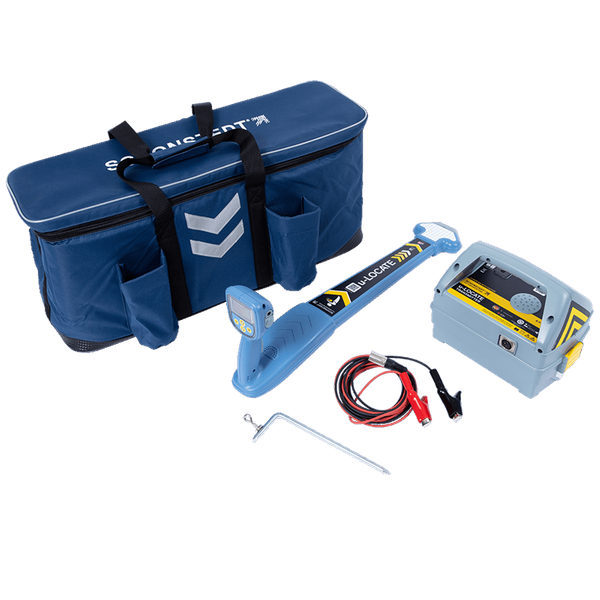
u-LOCATE
u-LOCATE+
We provide the Schonstedt u-LOCATE pipe & cable locator kit as a proven solution for private utility locating and 811 mark verification. This all-industry electromagnetic locator is designed to trace buried electric, gas, water, sewer, and telecom utilities across residential, commercial, and light industrial sites.
The u-LOCATE system is available in multiple configurations, including u-LOCATE and u-LOCATE+, allowing private locators to select appropriate active frequencies and sonde capability based on the utilities being traced. We work directly with customers to determine whether single- or dual-frequency operation is required, how sonde locating will be used, and which accessories improve signal coupling in difficult soil conditions.
Beyond supplying the equipment, we provide on-site training and post-sale technical support, helping private locating professionals correctly apply active vs. passive modes, interpret depth readings, and reduce false positives. This application-focused approach improves locating consistency and reduces liability across a wide range of private locate scenarios.
Best for Municipal Utilities & Asset Mapping
Municipal utilities require locating equipment capable of handling deep utilities, long-distance tracing, congested corridors, and documentation requirements for asset management and GIS mapping.
Best utility locators for municipalities:
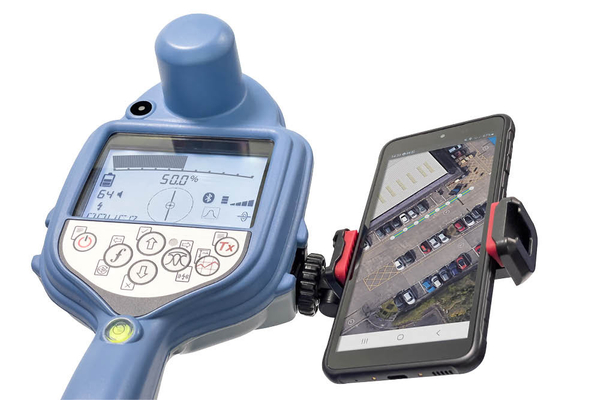
Radiodetection RD8200
Radiodetection RD8200 with GPS
Radiodetection RD8200 SG (Survey-Grade)
We provide the Radiodetection RD8200 series for municipal water, sewer, gas, electric, and telecom departments that require high locating accuracy and optional survey-grade mapping capability. The RD8200 platform supports a wide frequency range, advanced interference filtering, and deep utility detection, making it well-suited for complex municipal infrastructure.
For municipalities with mapping and data collection requirements, we supply RD8200 configurations with integrated GPS or RTK capability, allowing crews to collect utility location data in real time while locating. We assist with system configuration, frequency selection, and workflow integration to ensure compatibility with existing GIS platforms and documentation standards.
In addition to equipment supply, we deliver on-site training, refresher training, and ongoing technical support, helping municipal crews properly apply frequency selection, depth estimation, and interference mitigation techniques. This ensures consistent results across multiple operators and supports long-term infrastructure management goals.
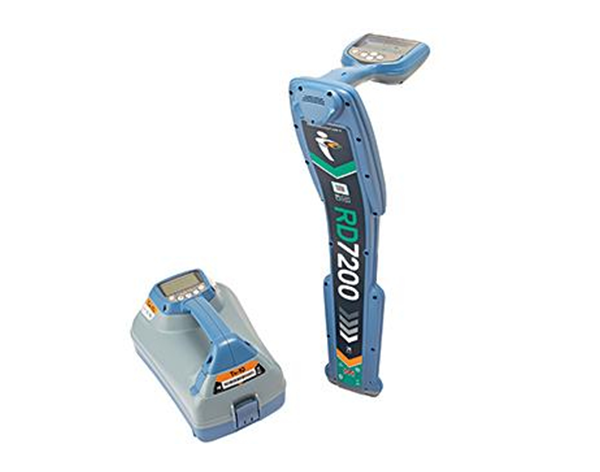
Best for Contractors & Excavation: Radiodetection RD7200
Contractors and excavation professionals need reliable locating equipment that balances ease of use with professional performance. Equipment must deliver clear results quickly while minimizing operator error and jobsite delays.
We provide contractor-focused locating solutions, including the Radiodetection RD7200 and contractor-grade systems from Leica. These locators are well-suited for pre-excavation scans, trenching operations, and general construction environments where locating is critical but not performed full-time.
We help contractors select equipment based on:
Typical utility depth
Site congestion
Frequency requirements
Operator experience level
For contractors needing more capability than entry-level locators but less complexity than survey-grade systems, the RD7200 provides a strong balance of multi-frequency performance, depth capability, and durability. We configure each system appropriately and provide training to ensure crews understand correct locating procedures before digging.
This approach helps contractors reduce strikes, rework, and downtime while maintaining safe and efficient excavation practices.
Utility Locator Comparison (Brand Guide)
When evaluating specific locator models, it's helpful to see how the major brands stack up. The table below compares some of the best utility locating equipment in terms of their ideal use cases, key strengths, and limitations. This overview will give you a sense of which manufacturer or model might align with your needs, whether you prioritize depth, ease of use, or advanced features.
| Brand/Model | Best Use Case | Strengths | Limitations |
|---|---|---|---|
| Radiodetection (e.g. RD8200) | High-precision locating on complex utilities; mapping and documentation needs. | Multi-frequency (active and passive) with deep reach (detects 18+ ft); optional built-in GPS/RTK for survey-grade maps; rugged for harsh environments. | Higher cost due to higher quality. |
| Vivax-Metrotech (vLoc3-Pro series) | Versatile multi-utility locating on diverse job sites (utility locating with some mapping capability). | Durable and field-proven. Wide frequency range (16 Hz up to 200 kHz) covers many locating scenarios; supports external RTK GPS for high-accuracy mapping when needed. | No native GPS integration (requires external receiver for mapping). Interface and features slightly less advanced compared to Radiodetection's flagship models, but comes at lower cost (approx. $3k–$6k range). |
| Schonstedt (u-LOCATE / REX) | Quick, everyday utility locates – ideal for private locating and 811 ticket verification. | Ultra-lightweight, single-hand operation – easy for anyone to use. New models offer multi-frequency capability (e.g. u-LOCATE+ has 33 kHz/82 kHz and sonde mode) for general-purpose locating. More affordable than top-tier locators (base kits in the $1–$3k range). | Maximum locate depth of ~18 ft and no integrated GPS or data logging. Lacks some high-end features (like on-board interference filtering) found in pricier units, making it less suited to very congested or challenging environments. |
| Leica (DD120 series) | Simple, fast locating for contractors on small-scale projects (e.g. building sites, home construction). | Very user-friendly ("turn-on-and-go" design). Provides reliable basic detection of utilities with minimal setup. Also budget-friendly – starting around $1,400 for a new unit. | Single-frequency operation with limited depth (~3 m or 10 ft max), so it cannot reach or detect deeper lines well. No advanced features (GPS, Bluetooth, etc.) – it's purely a basic locator, which may struggle in complex utility corridors or with non-conductive lines. |
| Pipehorn (Model 800HL) | Locating deep or long-run metallic utilities in challenging soil conditions (popular for pipe tracing in rural or industrial settings). | Dual-frequency design including a very low frequency (audio range) that penetrates far into ground – excellent for long distance tracing. Known for its robust, waterproof construction; proven in harsh field environments and difficult terrain. | Old-school analog technology (needle gauge and sound; no graphical display). No GPS or memory – purely a manual locator. Only works on conductive lines – it cannot help with plastic pipes unless a tracer wire or metallic conduit is present. |
| Amprobe (AT-3500) | Electrical utility work – tracing energized cables and finding breaks or ground faults in power lines. Also usable on de-energized lines. | Specifically designed for electric line locating: comes with clamp accessories to induce signals on live wires, and it provides clear visual/audible indicators to pinpoint cables. Good for troubleshooting circuits (finding opens or shorts). | Niche focus on electrical applications; not as versatile for plumbing or telecom use. On the higher end of price (~$4.5k–$7k) given its specialized scope. Lacks multi-frequency breadth of other brands – primarily tailored to power frequencies and tones. |
Sources: Manufacturer data and Locator Guys product information (Approx. prices are for reference; actual pricing may vary).
Why Buy Utility Locating Equipment from Locator Guys
At Locator Guys (C&S Solutions, Inc.), our mission is straightforward: help you get the right locator and ensure you know how to use it effectively. We pride ourselves on being a partner to our customers – from initial consultation to training and ongoing support. Here's why professionals choose us for underground utility equipment:
Application-Based Guidance
Our team doesn't take a one-size-fits-all approach. We listen to what you need to locate (type of utilities, typical depths, mapping requirements) and match you with the right equipment for your workflow. We often customize and configure locators for specific applications – ensuring that when you receive your tool, it's optimized for your use case, not just factory defaults. This consultative approach means you get expert advice across multiple brands, not a sales pitch for a single product.
Multi-Brand Expertise
We're a factory-authorized distributor and service center for many of the industry's top manufacturers – including Radiodetection, Schonstedt, RIDGID, Sensors & Software (GPR), and more. Because we carry multiple brands, we can offer unbiased comparisons and honest recommendations. Our specialists are familiar with the strengths of each system (we're former locators ourselves), so you'll get a solution that truly fits your needs. Whether it's an electromagnetic locator, a magnetic locator, or a GPR unit, we have the expertise to support it.
Training & Post-Sale Support
Every purchase from Locator Guys includes FREE on-site training for your team. We'll come to your location (or job site) and train your crew on the proper use of the equipment until they're comfortable and proficient. We also provide free annual refresher training – important as staff change or new features are added.
Our support doesn't end after training: we offer 24/7 on-call technical support – you can reach an expert by phone any time, even at 3 AM if you're on an emergency dig. If your unit ever needs repair, we have an in-house certified repair center and can provide loaner equipment to keep you working with minimal downtime. This level of support gives you peace of mind that your investment will continue to pay off for years to come.
Not Locked into One Manufacturer
Unlike some dealers, we're not locked into a single brand's ecosystem. Our goal is to find the best solution for you, even if that means exploring multiple manufacturers. We're proud to be a trusted distributor for a range of leading manufacturers and will coordinate with them to get you exactly what you need. This flexibility also means if one brand has a specific limitation or isn't the right fit, we can offer alternatives. The bottom line is you get choice – we're a one-stop shop that can provide truly impartial advice and a mix of products that serve your interests, not ours.
Our Promise
When you partner with Locator Guys, you're not just buying a locator; you're investing in a relationship built on expertise, training, and ongoing support to help you work safer and smarter underground. Our veteran-owned company has over 40 years of experience in utility locating, and we pour that knowledge into every customer interaction – from product selection to after-sale support.
Ready to find the perfect locator for your needs?
Talk to a Utility Locating Equipment Specialist at Locator Guys today. We'll gladly discuss your applications, arrange a free on-site demo, or provide a customized quote. Don't take chances with buried utilities – let our experts equip you with the best locating equipment for the job, and the know-how to use it with confidence.