
The Complete Buyer’s Guide to Trailer Jetters for Sewer & Drain Cleaning
Scale Your Sewer & Drain Business with the Right Trailer Jetter
For plumbing contractors, sewer specialists, and municipalities, a trailer jetter is more than just equipment. It’s a revenue driver.
As demand grows for faster, more effective pipe cleaning, contractors are moving beyond snaking and cabling to high-pressure water jetting systems that deliver deeper cleaning, fewer callbacks, and higher ticket jobs.
At Locator Guys, we work with contractors every day to match the right jetting system to their workload, pipe sizes, and growth goals. This guide breaks down everything you need to know, from PSI and GPM to real-world equipment selection, so you can invest with confidence.
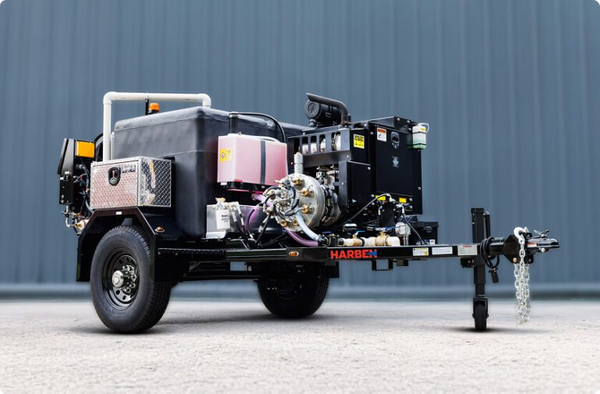
What Is a Trailer Jetter and How Does It Work?
A trailer jetter is a self-contained, towable system that uses high-pressure water and high flow rates to clean sewer and drain lines.
Each unit typically includes:
A gas or diesel engine
A high-pressure pump
A water tank
A hose reel with high-pressure jetting hose
Nozzles designed for different cleaning applications
Water is pressurized and forced through specialized nozzles that:
Break apart grease, sludge, and roots
Flush debris downstream
Restore pipe flow capacity
Unlike mechanical methods, jetting provides a full 360° pipe cleaning, not just a hole through the blockage.
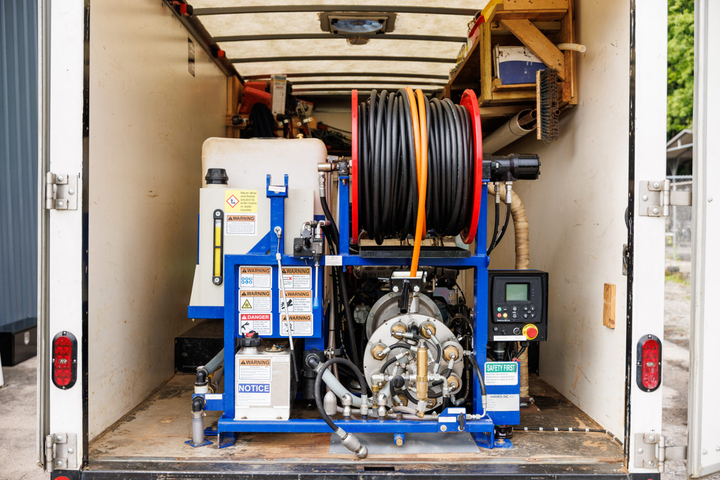
Trailer Jetter vs Portable vs Truck Jetters
Before you dive into specs and pricing, it’s critical to understand how different jetter types compare. Each category is designed for a specific level of workload, and choosing the wrong one can limit your capabilities or overshoot your budget.
Portable Jetters
Portable jetters are often the starting point for contractors entering high-pressure drain cleaning. They offer flexibility and lower upfront cost, but their limitations become apparent as job size and frequency increase.
Best for:
Small residential jobs
Light-duty cleaning
Limitations:
Lower PSI and GPM
Limited hose reach
Trailer Jetters
For most contractors, trailer jetters represent the ideal balance between power, mobility, and cost efficiency. They are designed to handle the majority of residential and commercial work without the constraints of smaller systems or the overhead of full truck units.
Best for:
Plumbing contractors
Commercial service work
Growing businesses
Advantages:
Higher power and flow
Larger water capacity
Mobility between job sites
Truck Jetters
Truck jetters are built for maximum output and continuous operation in demanding environments. While they deliver unmatched performance, they are typically reserved for municipalities and large-scale contractors due to their cost and size.
Best for:
Municipalities
Large-scale infrastructure work
Limitations:
High upfront cost
Less flexible for smaller contractors
For most contractors, trailer jetters offer the best balance of power, cost, and versatility.
Key Specs Explained: PSI vs GPM (What Actually Matters)
Understanding jetter performance starts with two key metrics: PSI and GPM. While many buyers focus on pressure alone, real-world cleaning performance depends on how these two factors work together.
PSI (Pressure)
Determines cutting power
Breaks apart tough blockages like roots
GPM (Flow Rate)
Determines flushing ability
Moves debris out of the pipe
Real-World Rule:
PSI breaks it
GPM removes it
| Application | PSI | GPM |
|---|---|---|
| Residential (2”–6”) | 3000–4000 | 6–10 |
| Commercial (6”–12”) | 3000–4000 | 8–20 |
| Municipal | 2000–4000 | 20–40 |
Most contractors operate in the 3000–4000 PSI and 8–13 GPM range, which covers the majority of service work.
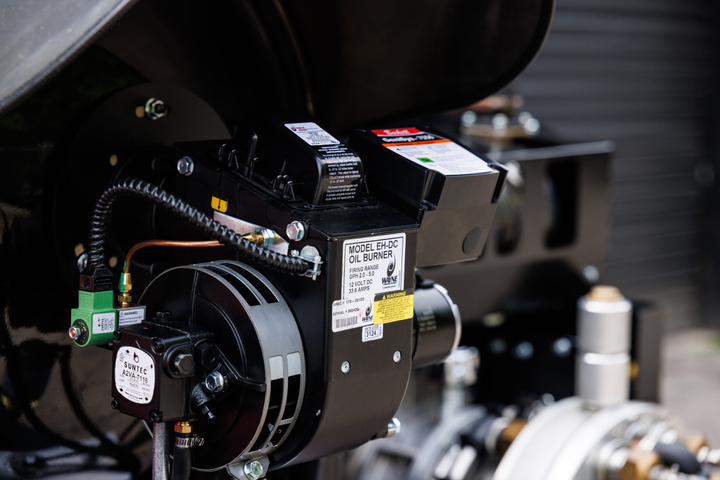
Gas vs Diesel Jetters
Engine type affects more than just fuel. It influences runtime, maintenance, and long-term operating costs. Choosing between gas and diesel comes down to how often you use your jetter and the type of work you perform.
Gas Systems
Lower upfront cost
Lighter weight
Ideal for contractors
Diesel Systems
Longer runtime
Better fuel efficiency
Preferred for heavy-duty use
What Size Trailer Jetter Do You Need?
Selecting the right size jetter isn’t about buying the biggest unit. It’s about matching your equipment to your most common jobs. Oversizing can waste budget, while undersizing can limit your ability to take on profitable work.
Residential / Service Plumbers
3000–4000 PSI
6–8 GPM
Ideal for 2”–6” lines
Commercial Contractors
4000 PSI
8–18 GPM
Handles grease, roots, and larger systems
Municipal / Industrial
20+ GPM
Designed for large-diameter mainlines
Common Applications for Trailer Jetters
One of the biggest advantages of trailer jetters is their versatility. From routine maintenance to heavy blockage removal, these systems allow contractors to handle a wide range of service calls with a single piece of equipment.
Trailer jetters are used across a wide range of jobs:
Tree root removal
Grease buildup clearing
Sewer line maintenance
Storm drain cleaning
Pre-inspection pipe cleaning
This versatility is why many contractors see jetters as one of the highest ROI equipment investments
Trailer Jetter ROI: Why Contractors Upgrade
Upgrading to a trailer jetter isn’t just an equipment decision. It’s a business decision. Contractors who invest in jetting systems often see immediate improvements in efficiency, service capability, and revenue potential.
Increase Revenue Per Job
Jetting services command higher prices than traditional drain cleaning.
Faster Job Completion
Clear lines in fewer passes
Reduce labor time
Fewer Callbacks
More thorough cleaning
Longer-lasting results
Expand Service Offerings
Take on larger jobs
Win commercial contracts
Features That Separate a Good Jetter from a Great One
Not all jetters are built the same. Beyond PSI and GPM, certain features can dramatically improve usability, safety, and long-term performance in the field.
When comparing systems, look beyond specs:
Adjustable pressure controls
High-quality hose reels
Wireless remote operation
Anti-freeze systems
Hot water capability
Trailer Jetter Pricing Guide
| Tier | Price Range | Typical Specs |
|---|---|---|
| Entry-Level | $8K–$15K | 3000 PSI / 5–8 GPM |
| Mid-Range | $15K–$30K | 4000 PSI / 8–13 GPM |
| High-End | $30K–$60K+ | 18–40 GPM |
Featured Trailer Jetters Available from Locator GuysTrailer Jetters Built for Real-World Sewer & Drain Work
When evaluating equipment, it’s important to look at systems that are proven in real job-site conditions, not just on paper. The right jetter should be built to handle daily use, tough blockages, and long operating hours. Locator Guys offers Harben trailer jetters, known for durability, performance, and long service life.
These systems feature:
Up to 4000 PSI and 18 GPM performance
Large-capacity water tanks
Wireless remote operation
Radial piston diaphragm pumps for extended lifespan
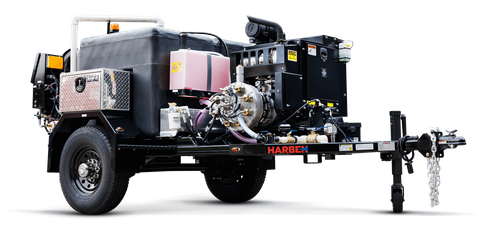
Harben E180 Trailer Jetter (Best-Selling Contractor Unit)
Best for: Plumbing contractors and everyday service work
The E180 is a proven, versatile system designed for both residential and commercial applications.
Key Capabilities:
Cleans lines up to 18”
Up to 4000 PSI / 18 GPM
~300-gallon tank
500 ft hose capacity
Ideal for contractors upgrading from portable systems
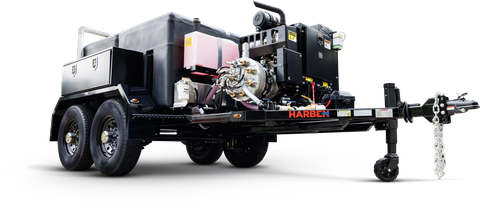
Harben ET180 Trailer Jetter (High-Capacity System)
Best for: High-volume and municipal work
Key Features:
Up to 4000 PSI / 18 GPM
750-gallon tank
Dual-axle trailer
Wireless remote
Built for long runtime and continuous operation
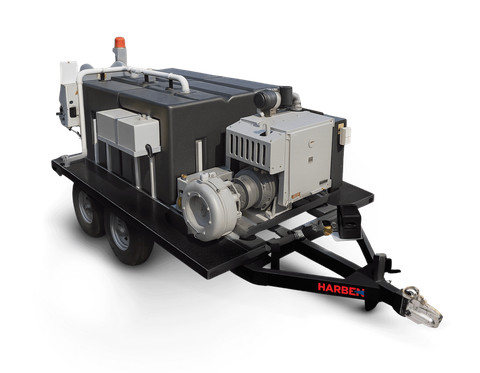
Harben ET180 High-Flow Trailer Jetter
Best for: Maximum production and job speed
Advantages:
Higher flow for faster flushing
Ideal for heavy debris and grease
Perfect for contractors focused on efficiency and throughput
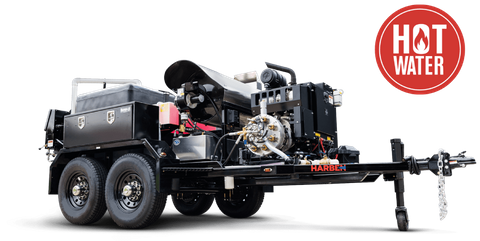
Harben ET180 Hot Water Trailer Jetter
Best for: Grease removal and cold climates
Key Capabilities:
Up to 4000 PSI / 10 GPM
Hot water up to 140°F
Breaks down grease faster and improves cleaning effectiveness
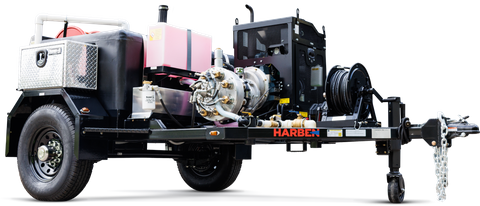
Harben ES-12 Trailer Jetter (Compact Option)
Best for: Entry-level and smaller crews
Benefits:
Lower cost
Easy transport
Reliable performance
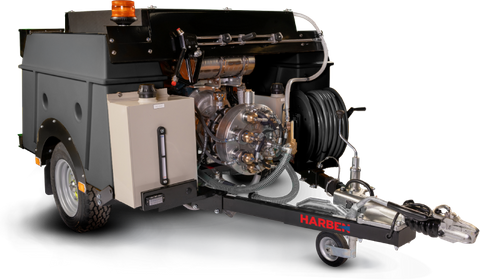
Harben DTK130 Trailer Jetter (Compact Power)
Best for: Residential and light commercial work
Key Specs:
4000 PSI / 18 GPM
130-gallon tank
Handles 2”–18” lines
High performance in a compact footprint
How to Choose the Right Trailer Jetter
Choosing the right jetter ultimately comes down to aligning your equipment with your workload, growth goals, and budget. Asking the right questions upfront ensures you invest in a system that supports your business long-term.
Ask these key questions:
What pipe sizes do you work with most?
What types of blockages do you see?
How often will you use the system?
Do you need hot water capability?
What’s your budget vs expected ROI?
Best Trailer Jetter Configurations by Use Case
Plumbers: 4000 PSI / 8 GPM
Contractors: 4000 PSI / 10–18 GPM
Municipalities: 20+ GPM systems
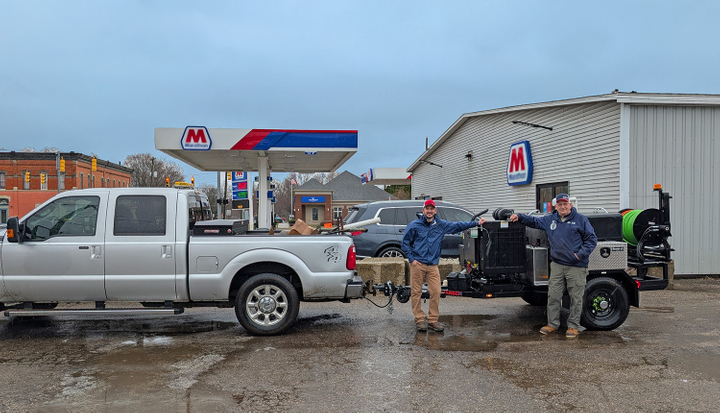
Why Buy a Trailer Jetter from Locator Guys
Locator Guys doesn’t just sell equipment. We help contractors choose the right system for their business.
What Sets Us Apart:
Deep industry expertise
Contractor-focused recommendations
Proven equipment from trusted brands
Ongoing support and guidance
FAQs About Trailer Jetters
Is GPM or PSI more important?
Both matter. PSI breaks apart debris, while GPM flushes it out of the pipe.
What size jetter do I need for residential work?
Typically 3000–4000 PSI and 6–8 GPM.
Can a trailer jetter handle main sewer lines?
Yes. Many systems can clean pipes up to 12 inches or more, depending on flow rate.
How much does a trailer jetter cost?
Prices typically range from $8,000 to $60,000+, depending on size and capabilities.
Ready to Add Jetting to Your Service Line?
If you’re looking to increase efficiency, expand your services, and take on higher-value work, a trailer jetter is one of the best investments you can make.
Talk to a Locator Guys equipment specialist today to find the right system for your operation