Utility Locating Equipment for Every Industry 

Veteran-Owned · 25+ Years · Factory-Authorized Service Center · Free Onsite Demos
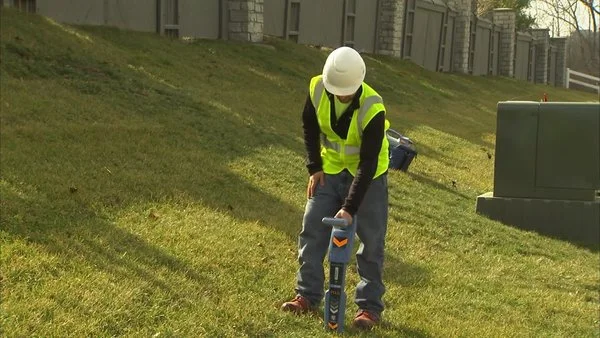
Technician in a hard hat and safety vest using a utility locator on a grassy slope near underground vaults.

Trusted manufacturers we sell and repair
Locator Guys | Equipment by industry

Equipment by industry

Locator Guys supplies locating, inspection and detection equipment to crews in 24 industries. Find the work you do to see which tools apply and what they help you avoid.

Showing all 24 industries

Power and electrical

Electric Contractors

Work around energized and buried circuits where a strike is not an option.
  • Locate underground power lines
  • Trace energized and de-energized circuits
  • Confirm routing before trenching or boring

Crews install with fewer unknowns and a record of what is in the ground.

Equipment for this work

Power Industry Contractors

Electrical systems that run underground across large project sites.
  • Identify buried power lines
  • Verify depth before installation
  • Plan work around live service

Projects stay on schedule and inside the site safety plan.

Equipment for this work

Power Plants

In-plant infrastructure supporting generation, much of it undocumented.
  • Locate internal utility runs
  • Verify routes before maintenance and upgrades
  • Prevent accidental damage during outage work

Maintenance windows stay short and generation stays online.

Equipment for this work

Gas and Electric Companies

High risk infrastructure where precision protects service and people.
  • Locate and map service lines
  • Detect faults and troubleshoot
  • Support preventative maintenance planning

Fewer outages, better records and documentation that holds up to review.

Equipment for this work

Gas, oil and pipeline

Oil Industry Contractors

High risk sites where buried infrastructure must be identified before work starts.
  • Locate pipelines and gathering lines
  • Verify asset position and depth
  • Support maintenance and repair calls

Work proceeds with the asset confirmed rather than assumed.

Equipment for this work

Petro Chemical Contractors

Plants with strict safety standards and dense underground systems.
  • Identify underground piping and conduit
  • Confirm clearances before excavation
  • Document findings for permits and job packets

Contractors meet site safety requirements without slowing the job.

Equipment for this work

Refineries

Congested infrastructure where a mistake carries safety and operational cost.
  • Identify underground systems in active areas
  • Verify routing before tie ins
  • Support maintenance and expansion work

Turnarounds and expansions move forward with fewer surprises.

Equipment for this work

Pipeline Companies

Linear assets that need locating for installation, maintenance and expansion.
  • Trace pipeline routes across distance
  • Locate coating faults and anomalies
  • Reduce third party damage

Field crews cover more ground with results they can defend.

Equipment for this work

Pipeline Asset Companies

Owners responsible for protecting large networks over the long term.
  • Locate and map pipeline assets
  • Monitor system integrity
  • Support scheduled inspections

Asset records stay current and inspection cycles stay on track.

Equipment for this work

Communications and broadband

Cable TV Providers

Aerial and buried networks that have to stay up during nearby digging.
  • Locate buried coaxial and fiber
  • Trace conduit across residential and commercial zones
  • Verify depth and routing before expansions or repairs

Fewer cuts, less downtime and faster deployment.

Equipment for this work

Telephone Companies

Buried communication lines that need protection during installation and repair.
  • Trace communication lines and conduit
  • Confirm routing before new placement
  • Locate faults on damaged lines

Service interruptions drop and expansion work moves faster.

Equipment for this work

Water and agriculture

Farms

Operations that depend on buried water, drainage and power.
  • Locate water lines and drainage systems
  • Trace underground electrical runs
  • Find fuel and storage connections

Upgrades and repairs happen without taking the operation down.

Equipment for this work

Farm Irrigation

Large systems of buried pipe that are rarely mapped.
  • Trace irrigation lines across acreage
  • Locate breaks and leaks
  • Plan expansions around existing pipe

Water gets where it belongs and repairs start in the right spot.

Equipment for this work

Sewer and drainage

Plumbing Contractors

Diagnosing underground problems before opening the ground.
  • Locate sewer and drain lines
  • Trace laterals from cleanout to main
  • Detect leaks on pressurized lines

Problems get found quickly with less exploratory digging.

Equipment for this work

Sewer and Water Contractors

Installing and maintaining underground systems on tight schedules.
  • Locate and inspect pipe
  • Detect leaks
  • Verify condition before repair or replacement

Crews work from data instead of guesswork.

Equipment for this work

Excavation and site work

Excavating Contractors

The highest risk activity for underground utility damage.
  • Electromagnetic locators
  • Ground penetrating radar systems
  • Sondes and tracing accessories

Underground conditions get verified before the bucket moves.

Equipment for this work

Utility Contractors

Installing and maintaining infrastructure in occupied right of way.
  • Locate existing utilities before installation
  • Confirm depth and clearance
  • Keep a record of what was found

Faster days, fewer strikes and less rework.

Equipment for this work

Locating Contractors

Professionals who need equipment that produces defensible results.
  • Electromagnetic locators
  • Ground penetrating radar
  • Leak detection and camera inspection

Locators expand what they can offer and stand behind the results.

Equipment for this work

Commercial Roofers

Fastening into decks where conduit and electrical may be hidden.
  • Identify concealed conduit and electrical lines
  • Scan decks before fastening
  • Confirm findings before crews start

Punctured live systems and the callbacks that follow get avoided.

Equipment for this work

Campuses, plants and public systems

Municipalities and Water, Sewer and Electric Systems

Aging systems and ongoing expansion, often with incomplete records.
  • Locate and map utilities across the system
  • Inspect and maintain existing lines
  • Train staff on the equipment they own

Fewer utility strikes, better planning data and more work handled in house.

Equipment for this work

Hospitals

Campus systems supporting operations where downtime is not acceptable.
  • Map underground utilities across the campus
  • Confirm routing before expansion or repair
  • Support facility documentation and compliance

Work happens around critical service instead of through it.

Equipment for this work

School Systems

Large campuses with aging systems and frequent construction.
  • Locate utilities before renovation
  • Confirm clearances during construction
  • Keep facility maps current

Projects avoid damage and campuses stay safe and open.

Equipment for this work

Universities

Campuses that operate like small cities with dense underground networks.
  • Map infrastructure across the campus
  • Support construction and utility upgrades
  • Maintain records between projects

Long term planning rests on current information.

Equipment for this work

Manufacturing Plants

In-plant systems that production depends on.
  • Locate internal utility infrastructure
  • Plan expansions and tie ins
  • Verify routes before floor or foundation work

Downtime from an accidental strike gets designed out.

Equipment for this work
Locator Guys | Industry FAQ

Common questions about locating equipment

What different industries ask before they buy, from which technology finds non-metallic pipe to how soil conditions change the answer.

Which industries need utility locating equipment?

Any industry working around underground infrastructure. That covers utility companies, excavating contractors, municipalities, telecom and broadband providers, pipeline operators, plumbing contractors and manufacturing facilities. If your crews dig, drill or build, locating equipment protects the work before it starts.

Why does utility locating matter for contractors and municipalities?

Contractors and municipalities maintain and expand infrastructure around utilities that are already in the ground, often with incomplete records. Without accurate locating, projects run into delays, utility strikes and safety hazards.

Reliable equipment lets teams identify buried assets, reduce liability and meet 811 damage prevention requirements.

Which industries need GPR or acoustic pipe locating?

Industries dealing with non-metallic infrastructure. Water utilities, sewer contractors, municipalities and pipeline companies often need ground penetrating radar or acoustic locating to find PVC, concrete and other non-conductive materials that an electromagnetic locator cannot detect.

How does locating equipment improve jobsite safety?

It lowers the risk of striking buried electric, gas and communication lines. Knowing what is underground before excavation protects workers, prevents service outages and avoids the kind of accident that stops a job entirely.

What equipment is right for my industry?

It depends on the application. A general starting point:

  • Contractors and excavators: electromagnetic locators and sondes
  • Municipalities and utilities: locators, ground penetrating radar and inspection cameras
  • Plumbing and sewer contractors: camera systems and pipe locators
  • Pipeline and energy: fault detection and precision tracing tools

Do different industries need different levels of accuracy?

Yes. Every industry needs accurate results, but oil and gas, power generation and municipal utilities work to tighter tolerances because of the safety risk and the regulations they answer to. In those environments a small error carries a large consequence.

Can locating equipment be used for preventative maintenance, not just excavation?

Yes. Many organizations use it for infrastructure mapping, leak detection, system inspection and asset verification. Finding a problem early extends the life of the system and reduces emergency repairs.

How does locating support infrastructure expansion projects?

Before installing anything new, crews need to know what is already there. Locating lets engineers and contractors design around existing utilities, avoid conflicts and skip the redesign that follows a surprise in the trench.

Which industries benefit most from ongoing training and support?

Industries with constant fieldwork, such as excavation, utilities, telecom and municipal departments. Training reduces operator error and gets full performance out of equipment a crew already owns.

How do I choose the right locating equipment for my industry?

Work through four things:

  • The type of utilities you trace, metallic or non-metallic
  • Jobsite conditions
  • The depth and accuracy the work requires
  • How often the equipment will be used

Talking those through with Locator Guys gets you equipment matched to your work rather than a one size fits all package.

Do locating needs vary by region or soil conditions?

Yes. Soil composition, utility congestion and regional infrastructure all affect performance. Clay heavy soil affects signal transmission, urban environments create interference, and rural work may call for longer range equipment.

What are the risks of working without proper locating equipment?

  • Utility strikes and service outages
  • Safety hazards including electrocution and gas leaks
  • Project delays and added cost
  • Regulatory fines and liability

Not sure which technology fits the work you do? Tell us the utilities you trace and the conditions you work in, and we will point you to the equipment that matches.

Talk to Locator Guys