
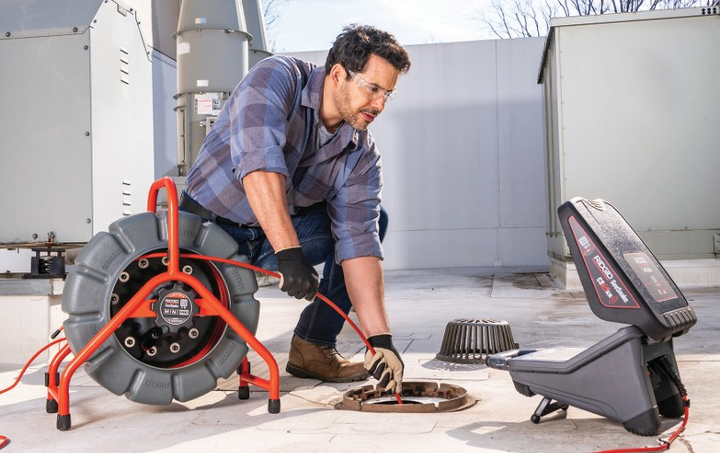
How Much Does Utility Locating Equipment Cost? A Contractor’s Pricing Guide
When you're budgeting for underground utility locators, you'll find prices vary widely – from a few hundred dollars for basic tools to well over $6,000 for advanced systems. The cost depends on the technology, features, and brand you need. We've put together this pricing guide to break down what to expect at each price tier, so you can match your needs to your budget. We'll cover entry-level locators under $1,000, mid-range models from $1,000–$3,000, high-end locators from $3,000–$6,000, and specialized equipment over $6,000. By understanding these price bands, you can make an informed decision about which utility locating equipment offers the best value for your work.
Budget and Entry-Level Locators (Under $1,000)
Contractors on a tight budget or those handling occasional, light-duty jobs can find capable tools for under $1,000. Entry-level cable and pipe locators often cost only a few hundred dollars. For example, consumer-grade underground wire tracers by companies like Vevor or Noyafa might be priced well under $500 yet still handle very shallow cable finds. In this tier, you’ll also find simple analog locators and basic two-piece transmitter/receiver sets aimed at DIY or infrequent use.
Featured Products In This Range:
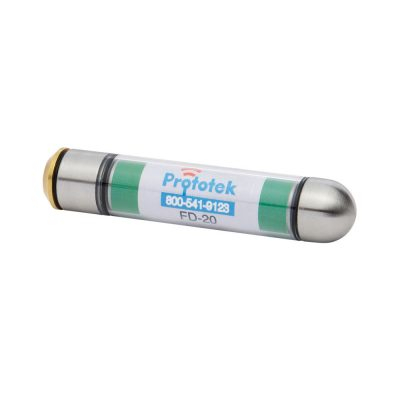
FD-20 | 512 Hz DuraSonde Transmitter
A 512 Hz sonde transmitter built for locating utilities (including septic lines) in both cast iron and nonmetallic pipes. It delivers reliable performance in challenging conditions with a locating range of up to ~23 feet in non-metal pipes (about 14 feet in cast iron) under ideal conditions.
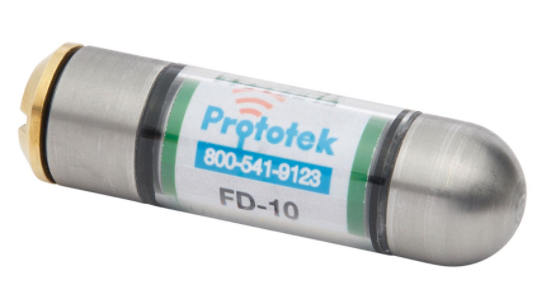
Prototek FD-10 | 512 Hz DuraSonde Transmitter
A robust 512 Hz DuraSonde transmitter for small to medium pipelines, designed to offer exceptional range and durability. It can reach depths of roughly 15 feet in nonmetallic lines (around 10 feet in cast iron), making it suitable for deeper locates in confined spaces.
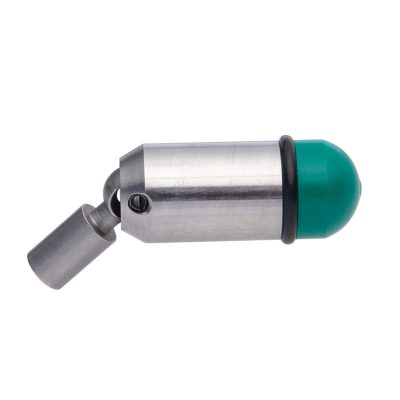
Prototek 512 Hz Mini Transmitter w/ Drophead (FM-05)
The smallest 512 Hz transmitter from Prototek, designed for precise locating in very small cast iron or plastic pipes. This compact sonde (about 5/8″ width) navigates tight elbows and P-traps, with an effective range of up to ~7 feet in nonmetallic lines (around 5 feet in cast iron).
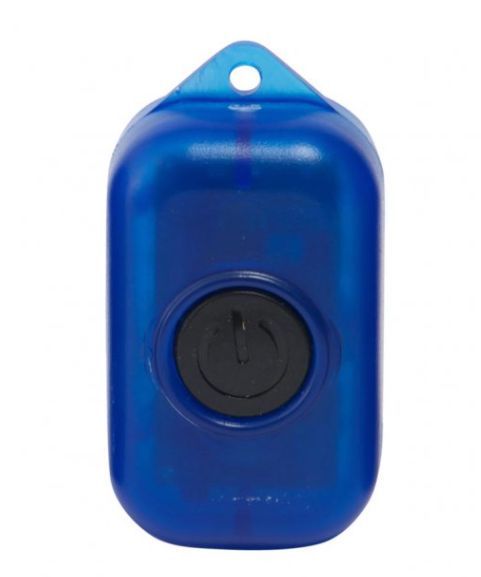
FTP-8 | 512 Hz Flushable Transmitter
A disposable 512 Hz flushable transmitter for sewer, septic, and home inspection applications, compatible with both cast iron and nonmetallic lines. It offers easy retrieval (it floats when flushed) and provides roughly an 8 ft range in cast iron pipes and 12 ft in nonmetal pipes under optimal conditions.
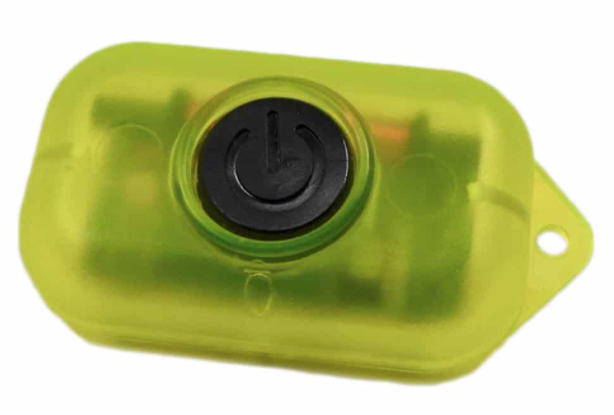
Prototek HTP-15 | 8 kHz Flushable Transmitter
A flushable 8 kHz transmitter optimized for pinpoint locating of nonmetallic lines and septic tanks. Its higher-frequency signal minimizes interference from power lines (helpful in urban/industrial settings) and achieves up to ~15 ft of depth in nonmetallic pipes under ideal conditions.
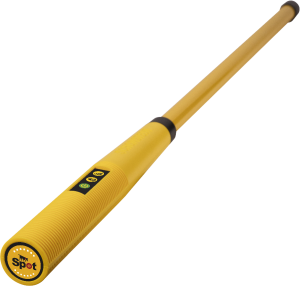
Schonstedt SPOT Magnetic Locator
A lightweight, handheld magnetic locator for detecting iron and steel objects underground (e.g. survey pins, valve boxes, manhole covers). Rugged and easy to use, the SPOT uses Schonstedt’s HeliFlux® sensors to pinpoint ferrous targets with precision at depths of up to ~18 feet.

New Box of Red Marker Balls (30 Pack)
A set of 30 passive RF marker balls (tuned to 169.8 kHz) for marking underground utilities such as electrical lines. These durable, long-life markers are buried alongside utility lines to make future locates easier – they enhance accuracy by helping crews quickly identify buried assets even in congested areas using a compatible locator.
What do you get at this budget level? Typically, limited depth and features. Many sub-$1,000 locators are single-frequency devices or tone generators that can trace to a modest depth (often just a few feet). They may lack digital displays, precise depth readouts, or interference filters. Durability can be lower too – plastic housings and minimal weather-proofing – making them best suited for controlled conditions. Still, these tools have their place for tasks like finding short runs of wire or metallic pipe in a small area. For instance, a simple analog tracer can help locate a broken dog fence wire or an irrigation line without the cost of professional gear.
It’s worth noting that magnetic locators (for finding buried iron objects like manhole covers and valve boxes) also fall in this price range. High-quality magnetic wands, such as the Schonstedt Spot, are priced under $1,000 while offering professional reliability. These specialize in detecting ferrous metal and are great for pinpointing buried curb boxes or cast-iron pipes. However, magnetic locators won’t trace cables or non-metallic lines – they’re a specialized tool distinct from electromagnetic pipe and cable locators.
Summary
Overall, if your work primarily involves shallow or infrequent locates, a budget-friendly locator can be an economical choice. Just keep in mind the trade-offs: limited depth range, fewer frequencies, and lack of advanced targeting features. Always verify that a low-cost unit meets the minimum requirements of your jobs (for example, the ability to detect the specific utility type and depth you need). When in doubt, consider stepping up to the next tier for more capability.
Mid-Range Utility Locators ($1,000–$3,000)
Most contractors and utility crews will be looking in this mid-range tier, where $1,000 to $3,000 buys a significant upgrade in capability and durability. In fact, many professional-grade locators start in the low thousands of dollars. At this price point, you can expect solid performance for everyday locating tasks – including locating municipal utilities, construction site digging, and 811 locate verification.
Featured Products In This Range:
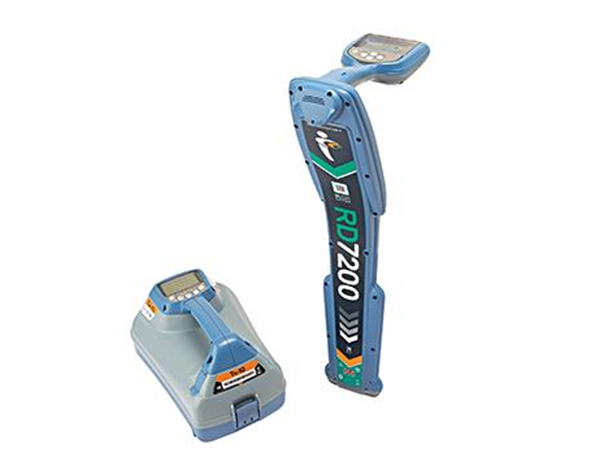
Radiodetection RD7200 Precision Locator
A high-performance, all-industry locator built for accurate, effective everyday use, offering reliable depth readings and easy operation in demanding environments.
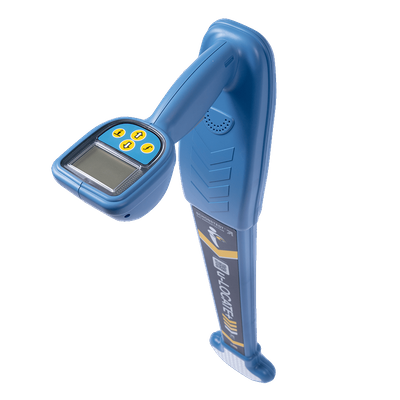
Schonstedt u-LOCATE Pipe & Cable Locator
A user-friendly solution for quickly identifying underground utilities with precision. It delivers reliable performance in a compact, easy-to-operate package, ideal for contractors and crews who need accurate results in the field.
Pipehorn 800HL Dual-Frequency Locator
Ideal for deep, metallic utility detection and rugged field work, providing reliable performance in tough soil conditions.
Leica DD120 Utility Locator
A reliable and budget-friendly locator best suited for general site work. Simple and affordable, it’s designed to help contractors perform basic
Mid-range locators typically offer digital receivers with depth estimation, multiple frequencies, and better build quality. For example, the Schonstedt u-LOCATE series (a popular choice for private locates and 811 ticket work) ranges roughly from about $1,400 to $2,000 depending on the model. The base u-LOCATE is a single-frequency (82 kHz) locator with passive power mode and depth readout, while the upgraded u-LOCATE+ adds a second frequency (33 kHz) and sonde capability for non-metallic lines. Both include a transmitter, receiver, carry case, and accessories as a complete kit – giving contractors a ready-to-use solution in the mid-$1,000-$3,000 price range.
Another example is the Leica DD120. This simple, robust locator is known as a budget-friendly option for general site work, typically starting in the mid-$1,000s. It provides a straightforward single-frequency operation with depth indication – ideal for contractors who need to perform standard cable or pipe locates without complex requirements. Similarly, the Pipehorn 800HL, a dual-frequency analog locator favored for its ability to push signal on deep metallic lines, falls in this tier with an approximate cost in the $1,500 to $2,500 range. These mid-level prices reflect equipment that can reach greater depths (often up to ~10–15 feet in good conditions) and handle more challenging locate scenarios than the entry-level tools.
Within $1k–$3k, you’ll also encounter compact multi-frequency locators offered by major brands. They may not have every high-end feature, but they cover the essentials. Many mid-range models include: at least two active frequencies for versatility, a passive power mode to detect live electrical lines, audible tone and visual meter feedback, and decent weather resistance (often IP54 or better). Depth accuracy improves in this class, as these locators use more sensitive antennas and circuitry than budget gadgets.
Summary
Contractors who invest in mid-range locators are usually those who need reliable performance daily but don’t require advanced bells and whistles. You can confidently locate gas, water, telecom, and electric lines on typical jobs. The equipment in this bracket tends to be lightweight and portable, often designed for one-hand operation and quick deployment – a big plus for busy field crews. Overall, the $1,000–$3,000 range is something of a sweet spot: you get professional-grade capability without the premium price of top-tier systems. For many users, a mid-range locator hits the “good enough” mark for accurate, routine utility detection.
High-End Precision Locators ($3,000–$6,000)
Stepping up into the $3,000 to $6,000 range opens the door to the top-tier pipe and cable locators on the market. These prices reflect advanced models built for heavy daily use, maximum detection capabilities, and often additional features like data logging or GPS integration. Most professional electromagnetic locators fall into this range, depending on configuration, making it the standard budget to equip a serious locating crew or utility department.
Featured Products In This Range:
Radiodetection’s most advanced utility locator, designed for high-precision locating in challenging environments. With built-in GPS, powerful signal filtering, and user-friendly guidance modes, it helps crews confidently locate and map underground utilities.
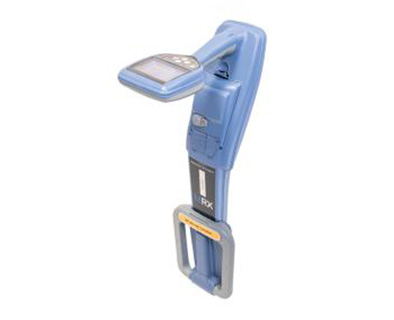
Adds integrated GPS capability to the MRX platform, providing accurate utility mapping alongside standard line-and-marker locating. This all-in-one locator is perfect for professionals who need location certainty in congested areas without added complexity.
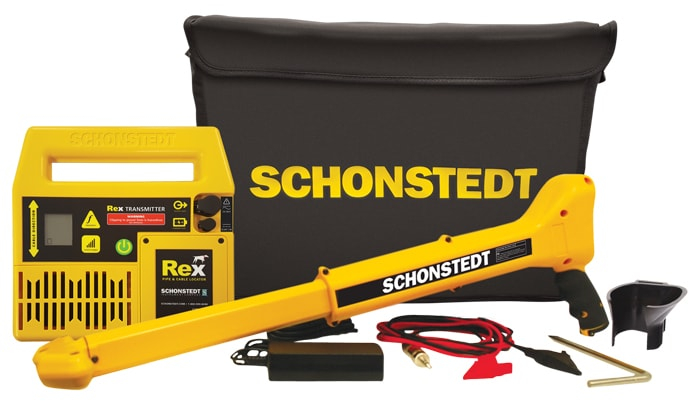
The newest multi-frequency locator from Schonstedt, allowing you to find any type of underground utility (water, sewer, electric, telecom, or gas) with one tool. Rugged and versatile, it’s built for fast, precise locates across various utility types.
Vivax Metrotech Utility Locators
High-end locators that offer a strong mix of durability and versatility for multi-utility work on diverse job sites, giving contractors a dependable option for complex locating tasks.
In this tier, you’ll find flagship models from leading manufacturers. For example, Radiodetection’s RD7200 and RD8200 series of precision locators are in this class. A basic Radiodetection RD8200 (which is a multi-frequency, high-precision locator) typically ranges from around the low-$5,000s up to the $6,000+ level once you include a transmitter and accessories. This range corresponds to buying the RD8200 receiver (~$5K by itself) and adding a suitable transmitter (available in 5W or 10W options) plus extras like carry cases or clamps, which can bring the package into the upper end of the bracket. The Schonstedt REX is another high-end locator – a compact multi-frequency system that sells for roughly mid-$3,000s in a full kit. These high-end locators come with powerful transmitters (often 5+ watts), multiple active frequencies (typically 3–5 or even more), and advanced signal processing to handle congested underground environments.
So what distinguishes a $5,000 locator from a $2,000 one? High-end locators deliver greater depth, accuracy, and versatility. They can often detect utility lines 18+ feet deep in optimal conditions, which is critical for locating deep sewers or electric lines that entry-level tools might miss. ThHigh-end locators that offer a strong mix of durability and versatility for multi-utility work on diverse job sites, giving contractors a dependable option for complex locating tasks.ey also provide more frequency options, including very low frequencies for long distance tracing and high frequencies for precision in crowded areas. Many models in this range incorporate features like automatic impedance matching, interference filters, and specialized modes (e.g. Radiodetection’s Peak+ mode or StrikeAlert warnings). The build quality is typically rugged – these units are fully waterproof, drop-tested, and ready for harsh field conditions day after day.
Another hallmark of the high-end tier is integration and mapping capability. Some locators around the $6k mark include Bluetooth connectivity or GPS add-ons. For instance, Radiodetection offers variants with built-in GPS (the RD8200G) that enable logging of locate points – extremely useful for mapping utilities or documenting locates. While the GPS-equipped versions cost more (the RD8200G receiver is about 10% higher than the base model), they allow you to geo-tag your locates for GIS records. High-end locators may also support external GPS/GIS systems or have accessories for survey-grade positioning (e.g., pairing with an RTK GPS rover). All these enhancements make the equipment more efficient for large projects, but they do push the price toward the upper end of the range.
Summary
If you’re a contractor or utility professional who needs maximum performance and reliability, budgeting roughly $3,000 to $6,000 for a complete locator set is reasonable. Within this budget, you can acquire a state-of-the-art locator like the Radiodetection RD8200 or Schonstedt REX kit that will serve for years. These units excel at finding a wide range of underground assets – from energized electrical lines to telecom cables, water and gas pipes (with proper connection or induction) – with a high degree of precision. They are the workhorses of the industry, and for organizations that locate daily, the investment pays off in fewer missed lines and faster, more confident locates.
Premium and Specialized Equipment (Over $6,000)
At the top of the pricing spectrum, you have specialized locating equipment and ultra-high-end models that cost over $6,000. These are the tools for niche applications or for professionals who demand the absolute best performance. In some cases, prices in this category can reach well into five figures. Let’s break down a few examples of what falls into this premium tier:
Survey-Grade Locators: Building on high-end electromagnetic locators, some manufacturers offer survey-grade versions with integrated GNSS (GPS) for mapping-grade accuracy. A prime example is the Radiodetection RD8200 SG (Survey Grade) model. The RD8200SG includes an RTK-enabled GPS receiver for centimeter-level positioning of utility lines. As expected, the addition of this technology comes at a premium – the RD8200SG’s receiver alone is around the high $8,000s. For instance, on Locator Guys, the RD8200SG is listed at $8,777 for the receiver (and about $9,058 with an accessory kit). And that’s before adding a transmitter! Outfitting a full RD8200SG system with a high-powered transmitter and all accessories can approach or exceed the $10,000 mark. The benefit is an all-in-one locating and mapping solution – you can trace utilities and capture their precise coordinates simultaneously, which is invaluable for surveys, GIS data collection, and large-scale infrastructure projects.
Ground Penetrating Radar (GPR) Systems: GPR is the go-to technology for locating non-metallic utilities (plastic pipes, concrete sewer lines, etc.) and for verifying underground features where electromagnetic locators won’t work. Professional GPR units are significantly more expensive than electromagnetic locators. Entry-level utility GPR systems often start around $14,000-$20,000, and higher-end models with deeper penetration or advanced data processing can run $30,000 or more. For example, a used Radiodetection LMX200 GPR (utility-focused ground radar) was recently listed by Locator Guys for about $17,000, indicating that new units would be even higher. These prices reflect the complex radar hardware and software involved. While costly, GPR can see things traditional locators cannot – including PVC pipes, underground storage tanks, and even voids or soil changes. Contractors who frequently need to locate non-traceable lines or need a comprehensive picture of what lies beneath a site may invest in GPR despite the steep cost. Often, GPR is owned by utility locating firms or large contractors and used on projects where standard locators fall short.
Advanced Accessory Packages and Custom Setups: Even within familiar product lines, the price can exceed $6,000 when you opt for the highest configurations or full kits. For instance, a top-of-the-line locator kit might include the receiver, a 10-watt transmitter, all frequency induction clamps, multiple sondes, extension rods, and a robust hard case. These comprehensive kits are designed for versatility (so you’re prepared for any locate job). The total investment for such a setup can easily cross $6k. As an example, Schonstedt offers a combo kit that pairs their Rex locator with a MagniCalc magnetic locator (for one-call crews who need both capabilities); this combo kit is around $4,700, and adding more accessories would increase the price further. Another scenario is buying additional transmitter models – e.g., some crews have both a low-power transmitter for delicate work and a high-power unit for long distance locates – which adds to the overall cost.
Featured Products In This Range:
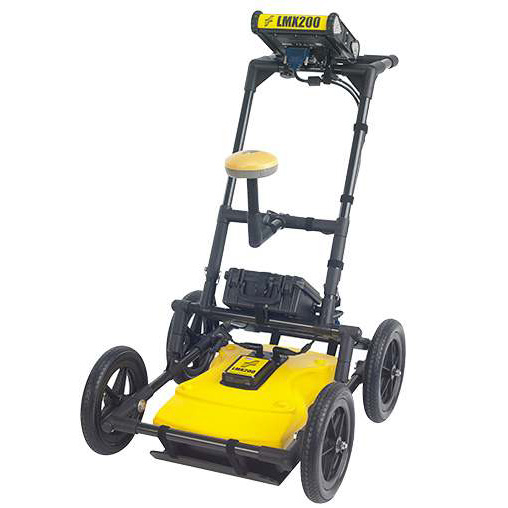
Sensors & Software LMX200 GPR
A premier Ground Penetrating Radar system that provides unprecedented insight into “non-locatable” subsurface features. The LMX200 allows detection of buried infrastructure that conventional locators can’t see (e.g. non-metallic pipes, failed tracer wires), and includes advanced modes for mapping utilities with high confidence.
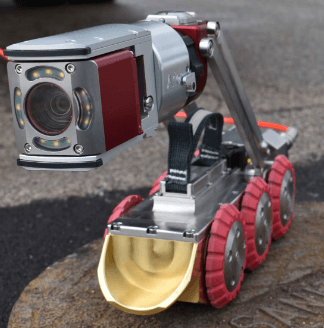
Aries Mainline Sewer Inspection Systems
Rugged, modular sewer and pipeline inspection equipment (crawlers with HD cameras) built for the demands of municipal and industrial use. Aries systems are trusted for their durability and high-definition clarity, enabling thorough inspections of pipes from 6-inch lines to large-diameter mains for data-driven maintenance decisions.
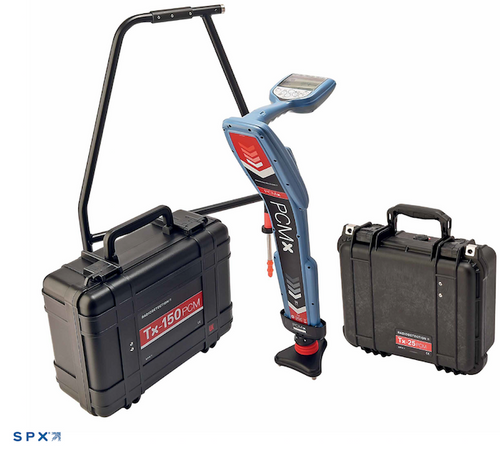
Radiodetection PCMx Pipeline Current Mapper
A specialized locator system that pinpoints pipeline coating faults and corrosion on otherwise inaccessible lines. The PCMx combines advanced utility locating technology with integrated GPS for faster data collection and survey mapping, allowing pipeline professionals to identify problem areas even under rivers or highways.
In the premium category, buyers should consider not just the price tag but the value of the investment. If these tools enable you to perform jobs that others can’t (like locating plastic utilities or providing survey-grade maps of underground lines), they can create new business opportunities and reduce risk significantly. However, training and support become even more important as equipment gets more sophisticated. Fortunately, when you purchase from a specialized distributor like Locator Guys, you’re not just getting a product – you’re also getting expert support. High-end locators and GPR systems usually come with on-site training and ongoing technical assistance to ensure you fully utilize their capabilities. (Locator Guys provides free on-site training with every major equipment purchase, which adds enormous value, especially for advanced systems.)
Bottom line
Anything above ~$6,000 is a significant investment in utility locating tech. This tier is reserved for the most advanced electromagnetic locators with add-ons, or alternate technologies like GPR. Assess your typical jobs carefully – many contractors won’t need to spend this much to get the performance they require. But for those who do (e.g. large utilities, locate service companies, or engineering firms), the ROI can be realized in safer digs, avoided utility strikes, and enhanced service offerings that set you apart from competitors.
Choosing the Right Locator for Your Budget
Understanding these price ranges is only half the equation – the other half is knowing which features you actually need for the work you do. Here are a few key considerations when comparing utility locators at different price points:
Detection Technology: All the equipment discussed (except GPR) rely on electromagnetic locating – transmitting a signal that traces along conductive lines. Lower-cost models use the same basic principle but may have fewer frequencies or less signal power. If you only locate conductive utilities (metal pipes, copper, tracer-wired lines), an EM locator suffices. For non-metallic lines, you’ll need GPR or to insert tracers/sondes, which tends to push you into higher price brackets or additional gear.
Number of Frequencies: Frequency flexibility is a major factor. Multi-frequency locators (often mid to high tier, like Radiodetection or higher Schonstedt models) let you adapt to various soil conditions and interference, improving accuracy. Single-frequency units (common in budget range) are simpler but can struggle if that one frequency isn’t ideal for the situation. Consider spending more for at least a dual-frequency locator if you work in diverse environments.
Depth Capability: Deeper detection generally requires a more powerful transmitter and a more sensitive receiver – features of higher-end locators. Aim for equipment rated to at least ~15 feet if you’re locating utilities like sewer or water mains. Entry-level devices might only reliably detect 3–8 feet deep. Also, high-end locators maintain accuracy at depth better, whereas cheap ones might give erratic readings as depth increases.
Features and Add-Ons: Extra features can drive up cost, but they also add value. Examples include GPS logging, Bluetooth connectivity, and data recording (so you can download locate data or integrate with mapping software). These are usually found on premium models. If your projects demand documentation or mapping of underground lines, it might justify a higher upfront cost for a locator with those capabilities. On the other hand, if you just need to mark the ground and move on, you could save money by skipping the tech extras.
- Durability and Support: All tools eventually need calibration or repair. Professional-grade locators (mid-range and up) are built tougher – often water-resistant, drop-resistant (IP ratings) – which is crucial for daily field use. They also come with better warranties (two or three years is common for brands like Schonstedt and Radiodetection) and are supported by the manufacturer’s service network. When you purchase through an authorized dealer like Locator Guys, you also benefit from training and post-sale support. These services are included with your purchase at no extra cost from Locator Guys, which means even if you invest more upfront, you’re supported to get the most out of your equipment.
- Finally, always evaluate your use case: If you’re a small contracting business that occasionally needs to find a power line, a mid-range locator around $1,500 might hit the sweet spot. If you’re a utility locating specialist who works on complex industrial sites, investing $5,000–$6,000 in a top-tier locator (or more in a GPR unit) could be essential for your operations. And remember that used equipment is an option too – you might find high-end models at lower prices second-hand, though you’ll want to ensure they’re serviced and calibrated.
Summary
Utility locating equipment costs can be grouped into clear tiers, and each tier aligns with certain capabilities. By matching the equipment’s features to your typical job requirements and budget, you can make the smart choice – getting the performance you need without overspending on features you won’t use.
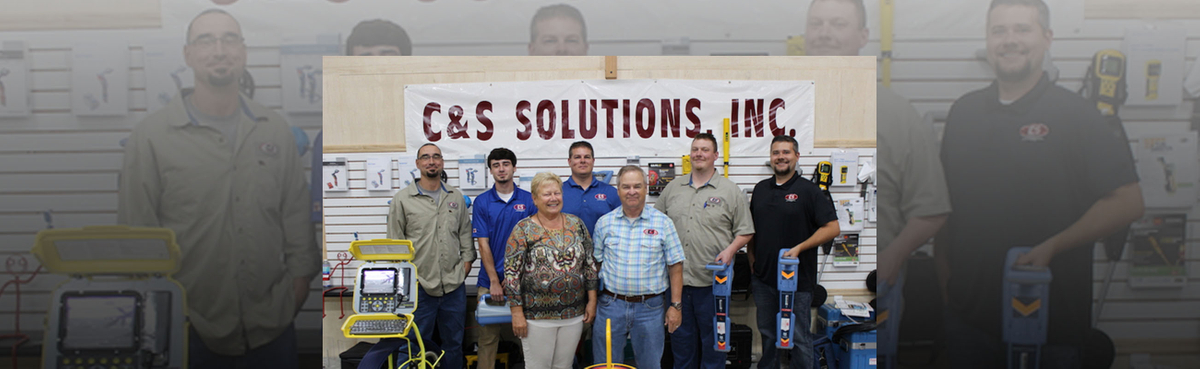
Need Help Choosing? We're Here for You
At Locator Guys (C&S Solutions, Inc.), we bring over 40 years of field experience to help you find exactly what you need. We're not just equipment sellers – we're former locators and field professionals who understand the real challenges you face on every job site.
We offer a wide range of utility locator products – from affordable basic models to advanced systems – all with expert guidance on selecting the right one. You can browse our product lineup to compare models and see current price ranges, or simply contact us for personalized recommendations.
What sets us apart:
Free on-site training with every major equipment purchase
24/7 technical support from field-experienced specialists
Factory-authorized service and repair for all major brands
Loaner program to keep your crews working during repairs
Whether you're outfitting a crew on a budget or investing in the latest locating technology, we'll make sure you have the knowledge and equipment to find every buried utility with confidence. Our goal is simple: equip you with the tools and knowledge needed to reduce risk, prevent utility strikes, and work with confidence in the field.
Ready to get started?
Call us at 513-922-7444 to speak with a regional specialist
Contact us for a personalized equipment quote
Proudly veteran-owned and serving Ohio, Indiana, and Michigan since 2001.